
 USD (US$)
 AUD (AU$)
 CAD (CA$)
 EUR (€)
 GBP (£)
 JPY (¥)
You’ve found the platform, tapped through the gate, and reached the train just as the doors open. Then you hesitate. Where should you stand? Is your backpack in someone’s way? Can you chat with the person beside you? It’s a moment almost every first-timer on Japan public transport recognizes. The unspoken rules can feel like something everyone else already knows. Understanding a few everyday habits helps you feel more comfortable, whether you’re crossing Tokyo or heading out for a day in Osaka.
We asked two of our Tourist Japan guides, Hifumi Fujii and Jay Tee, to share their perspectives. They help travelers find their feet in Japan every day, explaining the small details that route maps leave out. Their advice for Japan public transport comes back to a few simple ideas: give people space, pay attention to your surroundings, and don’t worry about getting everything perfect.
Meet Jay and Hifumi
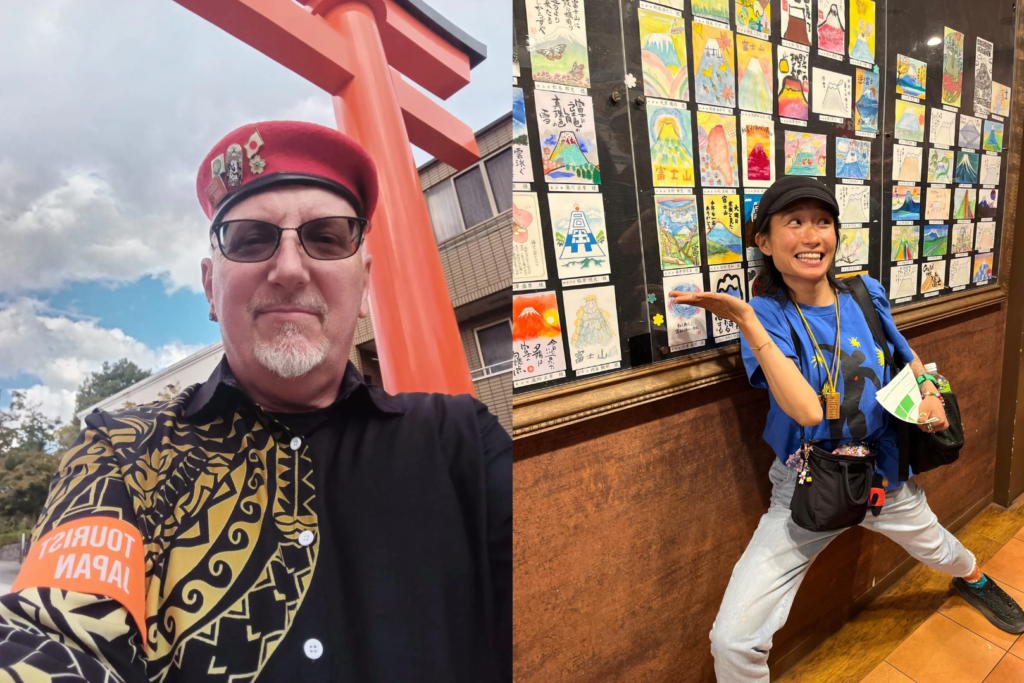
Hifumi Fujii | Tokyo
Born and raised in Tokyo, Hifumi knows the capital both from everyday life and from guiding visitors through it. Spending time with travelers means she notices which customs surprise them and where a little explanation makes a difference.
Jay Tee | Kobe and Kansai
Based in Kobe, Jay has called Kansai home for around 20 years. He shares the everyday knowledge that comes from living here, helping visitors understand unfamiliar customs and feel more confident exploring Japan.
Rule #1: Save Your Meal for the Right Train
Eating on local trains in Japan is generally avoided, but on the Shinkansen, a meal is part of the experience. Food is one of the pleasures of traveling here, so it helps to know when to save it. On commuter trains, subways, and city buses, space is shared closely, smells carry, and sudden movements can cause spills. Save your meal for before or after the ride.
On the Shinkansen and many long-distance trains in Japan, the atmosphere is different. Settling into your seat with an ekiben, a station bento, is a familiar part of the journey. Wherever you eat, leave your space tidy and be prepared to carry your trash until you find a suitable bin. A small bag in your daypack is useful.
Rule #2: Remember Which City You’re In Before You Step on the Escalator
In Tokyo, people traditionally stand on the left side of the escalator. In Osaka, they stand on the right. Escalator etiquette often surprises first-time visitors to Japan, partly because it varies by city and partly because it’s changing. You’ll still see those traditional habits, but they don’t tell the whole story.
Railway companies and public authorities have been encouraging passengers to stand still and use both sides of escalators, rather than leaving one side open for walking.
“Escalator customs are changing, although many commuters still follow the older habit.” - Jay
Rule #3: Let the Silence Do the Talking
Yes, you can talk on trains in Japan, as long as you keep your voice low. Japanese commuter trains are often surprisingly quiet. People read, scroll through their phones, or close their eyes between stops. Chatting with your travel companions is fine, as long as your conversation stays between you. Phone calls are the one thing to avoid. Put your phone on silent, keep headphone volume at a considerate level, and save calls for after the journey.
“Many visitors already arrive knowing this custom, so you may be more prepared than you think.” - Hifumi.
The same consideration applies on city buses. You don’t need to sit in complete silence. Just be aware that everyone around you is sharing the space. Near priority seats, watch for additional phone instructions and follow the signs on the service you’re using.
Rule #4: Think Twice Before Taking That Empty Seat
You can sit in a priority seat in Japan, but be ready to give it up when someone needs it more. Priority seats are marked on trains and buses for passengers such as older people, pregnant passengers, and people with disabilities or injuries. If you use one, stay aware of those around you. Someone’s need for a seat won’t always be visible.
Two symbols are worth recognizing. The Maternity Mark identifies pregnant passengers, while the Japanese Help Mark, a red tag, indicates that someone may need assistance even when the reason isn’t obvious. Offer your seat discreetly, without asking for an explanation. A small gesture toward it, and a simple “douzo” (“please, go ahead”), is enough.

Rule #5: Rethink Where Your Backpack Goes
On a busy Japanese train, wear your backpack on your front or place it on the overhead rack. In a crowded carriage, small movements make a difference. A backpack can bump into someone whenever you turn around, even if you don’t notice. Keep suitcases out of aisles and doorways, and leave seats free for passengers rather than for bags. If you’re exploring with large bags, luggage storage in Tokyo or luggage forwarding can make the day easier.
“Even a short journey can involve long station corridors, stairs, and a detour to find an elevator. Traveling light helps.“ - Hifumi.
Keep that awareness going through the station. Have your ticket or IC card (such as Suica, PASMO, or ICOCA) ready before reaching the gates, and step out of the flow of people when you need to check your map.
Rule #6: Hold Back When the Doors Slide Open
On trains in Japan, you wait at the designated spot on the platform and let everyone off before you board. Your first clue is usually under your feet. Platform markings show where to queue and where the train doors will open. Join the line and leave the doorway clear. Once everyone is off, board and move further into the carriage so the people behind you can enter too.
“Visitors sometimes board too early because they’re worried the train will leave without them, but there’s no need. Japanese trains are timed to give passengers a moment to board, so stay in line and board when it’s your turn. Plus, it’s worth remembering that if you miss one, the next one is often only a few minutes away!” - Hifumi.
Following the line takes some of that uncertainty away. Wait your turn, then board with the people around you. At busy stops, passengers standing near the doors may step briefly onto the platform to let others out, then get back on. If you’re blocking the exit, follow their lead.
Rule #7: Look Up Before You Choose a Carriage
Some trains in Japan have women-only cars, mostly during weekday rush hours. Platform markings identify the boarding positions, and signs explain when the arrangement applies. There are exceptions for certain passengers, including young children, passengers with disabilities, and caregivers. Check the information for the service you’re using rather than assuming the same arrangements apply everywhere. If you enter the wrong carriage by mistake, move calmly to another car when it’s safe to do so.
Rule #8: Don’t Board the Bus at the Wrong Door
Buses follow the same principles as the rest of Japan’s public transport: queue at the stop, keep conversations quiet, avoid blocking doors with bags, give other passengers room to board and leave, and have your IC card or fare ready. What’s unique to Japanese buses is the unspoken rules around bus doors and which one you are supposed to enter and exit through.
“In Tokyo, you usually board at the front and pay as you get on, while in Kyoto and many other cities, you board through the middle or rear door and pay as you leave.” - Jay
If in doubt, follow the crowd. If it’s still unclear, ask the driver for help while the bus is stationary. As your stop approaches, press the button in advance and wait until the bus has stopped before moving toward the exit.

Japan Public Transport Etiquette at a Glance
| Situation | A simple habit to remember |
| Boarding | Let people off first, then board with the line |
| Conversations | Speak quietly and save calls for later |
| Priority seats | Stay aware and offer your seat when needed |
| Bags | Keep them close and clear of doors, aisles, and seats |
| Eating | Save meals for suitable long-distance journeys |
| Escalators | Stand still, hold the handrail, and follow signs |
| Women-only cars | Check the designated cars and operating times |
| Buses | Which door you board on and when you pay depends on which city you’re in. Follow the crowds if unsure. |
You Don’t Have to Know Everything Before You Arrive
Watch how people share the space on Japan public transport, follow the signs, and give yourself time to settle into the rhythm. If you’re unsure, ask for help. A destination on your phone, a translation app, or a few basic Japanese phrases can make the conversation easier.
“Don’t mistake hesitation for unfriendliness. Someone may simply be working out how to help across a language barrier.” - Jay.
Keep your question simple and give the person time to respond. You’ll learn as you go, and those small habits will start to feel more natural.
Experience Japan With People Who Know It
Learning those habits is easier with someone beside you, and that’s what we value about having Hifumi and Jay on our team. Alongside the places they introduce you to, they share the everyday understanding that comes from living here: knowing which exit saves a long walk, how much time a transfer needs, and when to slow the pace.
It might be a quiet explanation on a platform or an observation that helps an unfamiliar custom make sense. These moments help you feel more connected to the country you’ve come to explore. On our Japan tour packages, each guided day is led by a local who knows the city inside and out, while our dedicated host team keeps the logistics seamless behind the scenes. You bring your curiosity. Our team helps you find your feet.
Explore all Japan Tour Packages
Japan Public Transport FAQ
Can you talk on trains and buses in Japan?
Yes, quiet conversation is fine on trains and buses in Japan. Keep your voice low, set your phone to silent, and save phone calls until you’re off the train.
Can you eat on trains in Japan?
Eating is generally avoided on commuter trains, subways, and city buses. On the Shinkansen and many long-distance trains, it’s normal to enjoy a meal, especially an ekiben, a bento sold at the station.
Which side of the escalator do you stand on in Japan?
Traditionally, people stand on the left in Tokyo and on the right in Osaka, leaving the other side for walking. Railway companies now encourage everyone to stand still on both sides, so follow the posted signs.
What is the Help Mark in Japan?
The Help Mark is a red tag with a white cross and heart. People wear it on their bags when they may need assistance or a seat, even if the reason isn’t visible. If you see one, offering your seat is a kind gesture.
Do you pay when boarding or leaving a bus in Japan?
It depends on the city. On most Tokyo buses, you board at the front and pay as you get on. In Kyoto and many other cities, you board through the middle or rear door and pay at the front as you leave. IC cards such as Suica, PASMO, and ICOCA work on most city buses.
Do you need to reserve luggage space on the Shinkansen?
On the Tokaido, Sanyo, and Kyushu Shinkansen, suitcases with total dimensions exceeding 160 cm require a reserved seat in an oversized baggage area. Smaller bags can go on the overhead rack. Check the current JR rules before you book.
When is rush hour on trains in Tokyo?
Tokyo trains are busiest on weekdays from around 7:30 to 9:30 am and 5:30 to 8:00 pm. If you’re carrying luggage or traveling with children, plan around these times where you can.
Is it okay to sleep on trains in Japan?
Yes. Many commuters nap on the train, and it’s completely normal. Keep your bags close and set an alarm so you don’t miss your stop.
Can you take photos on trains in Japan?
Photos of the train or the view from the window are fine. Avoid photographing other passengers without their permission, and keep out of the way of doors while you do.
Can you bring a stroller on trains in Japan?
Yes, strollers are allowed on trains and most buses in Japan. Avoid the busiest times, use station elevators, and look for the designated wheelchair and stroller spaces in the carriage.
What happens if you miss your reserved Shinkansen?
With a standard reserved ticket, you can usually ride in a non-reserved car on a later train the same day. Discounted and special tickets may not allow this, so check your ticket conditions and ask railway staff if you’re unsure.


